
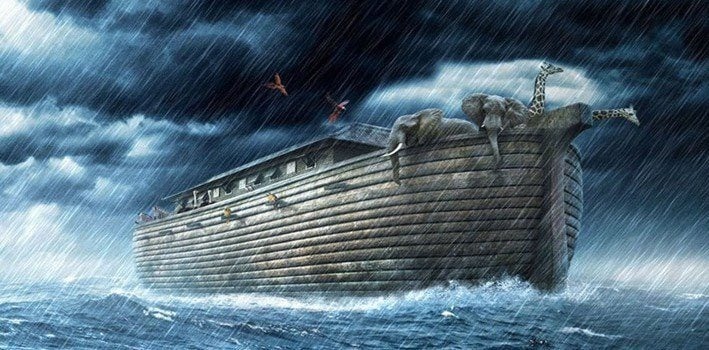
For nearly 2,000 years, people have claimed to find traces of Noah’s Ark. The story is a fascinating mix of exploration, faith, archaeology, and controversy.
1. Ancient Reports (1st Century–Middle Ages)
The earliest claims came from ancient historians rather than archaeologists.
- The Jewish historian Flavius Josephus wrote that remnants of the Ark could still be seen in Armenia.
- Early Christian writers such as Eusebius and others repeated traditions that pieces of the Ark survived on mountains in the Ararat region. (Wikipedia)
These accounts were based on local traditions rather than scientific investigation.
2. James Bryce’s Wood Fragment (1876)
In 1876, British politician and explorer James Bryce climbed Mount Ararat and reported finding a piece of worked wood high on the mountain. He suggested it might have come from Noah’s Ark. (National Geographic)
Why it wasn’t accepted:
- The wood was never conclusively linked to an ancient ship.
- No supporting archaeological evidence was found nearby. (National Geographic)
3. George Hagopian’s Story (Early 1900s)
One of the most famous eyewitness claims came from George Hagopian.
He said that as a boy around 1908, his uncle took him to a gigantic wooden vessel on Ararat and that he actually climbed onto it. His story attracted considerable attention among Ark researchers. (Ark Encounter)
Why it remains controversial:
- No expedition has ever verified the location he described.
- Multiple searches of the area failed to find the vessel. (Ark Encounter)
4. The Ararat Anomaly (1949–Present)
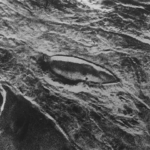
In 1949, aerial photographs of Mount Ararat revealed a strange object protruding from ice and snow. It became known as the “Ararat Anomaly.” (Ark Encounter)



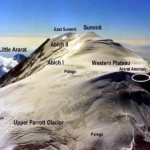
Supporters argued:
- The shape resembled a large man-made structure.
Critics argued:
- The images are too ambiguous.
- The feature is likely a rock formation or glacial effect. (Ark Encounter)
To this day, no expedition has produced conclusive evidence from the anomaly.
5. Ron Wyatt and the Durupinar Formation (1970s–1990s)
Perhaps the most famous modern claim came from amateur explorer Ron Wyatt.
He promoted the nearby Durupinar Formation as the Ark’s remains. The site is a boat-shaped geological formation about 538 feet long—remarkably close to biblical Ark dimensions. (Answers in Genesis)
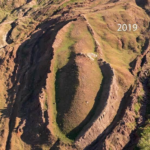
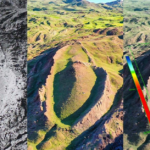
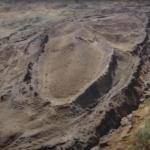
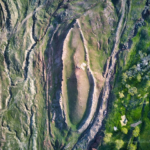
Wyatt claimed to find:
- Metal-like objects
- Structural patterns
- Evidence of petrified wood
However:
- Geologists generally concluded the formation is natural.
- Even many creationist researchers rejected Wyatt’s evidence. (Answers in Genesis)
The Durupinar site remains the leading candidate among Ark enthusiasts despite widespread skepticism.
6. Modern Radar and Soil Studies (2021–2026)
Recent teams, including researchers associated with Noah’s Ark Scans, have used:
- Ground-penetrating radar
- Electrical imaging
- Soil chemistry analysis
They report:
- Underground shapes resembling corridors.
- Three-layered structures reminiscent of decks.
- Soil differences that some researchers interpret as evidence of decayed organic material. (New York Post)
Supporters see these findings as the strongest evidence yet.
Critics respond that:
- Similar results can occur in natural geological formations.
- No excavated wooden ship has been recovered.
- The claims have not yet convinced mainstream archaeologists. (National Geographic)
What Do Most Archaeologists Think?
The prevailing academic view is that Noah’s Ark has not been found. Many archaeologists regard Ark hunting as pseudoarchaeology because no claimed discovery has produced verifiable remains that can be securely dated and identified as the biblical vessel. (National Geographic)
An additional complication is that Genesis says the Ark came to rest in the “mountains of Ararat,” which likely referred to a broad ancient region (Urartu), not necessarily the modern mountain called Ararat. That means searchers may not even be looking in the right place. (National Geographic)
Timeline of Major Claims
| Year | Claim |
|---|---|
| 1st century | Josephus reports Ark remnants in Armenia |
| 1876 | James Bryce finds wood on Ararat |
| ~1908 | George Hagopian claims to have seen the Ark |
| 1949 | Ararat Anomaly photographed |
| 1959 | Durupinar Formation gains attention |
| 1970s–1990s | Ron Wyatt promotes Durupinar as the Ark |
| 2021–2026 | Radar, soil, and geophysical studies at Durupinar |
The most influential modern claim is still the Durupinar Formation, while the most enduring mystery remains whether the biblical “mountains of Ararat” refer to modern Mount Ararat at all.